A copy is only useful if it turns the lock without a fight. Keys cut on a tired machine, or copied from a key that has spent years on a crowded ring, come out slightly off, and slightly off is enough to make a deadbolt stick halfway. Every copy we make is tried in the lock it belongs to before it leaves the technician's hand.
That last step matters more near the water. Salt air and humidity already make locks here feel stiffer than they should, and a rough copy only adds to the strain. A clean key turns with less force, which is kinder to the cylinder and to whoever is standing at the door with groceries.
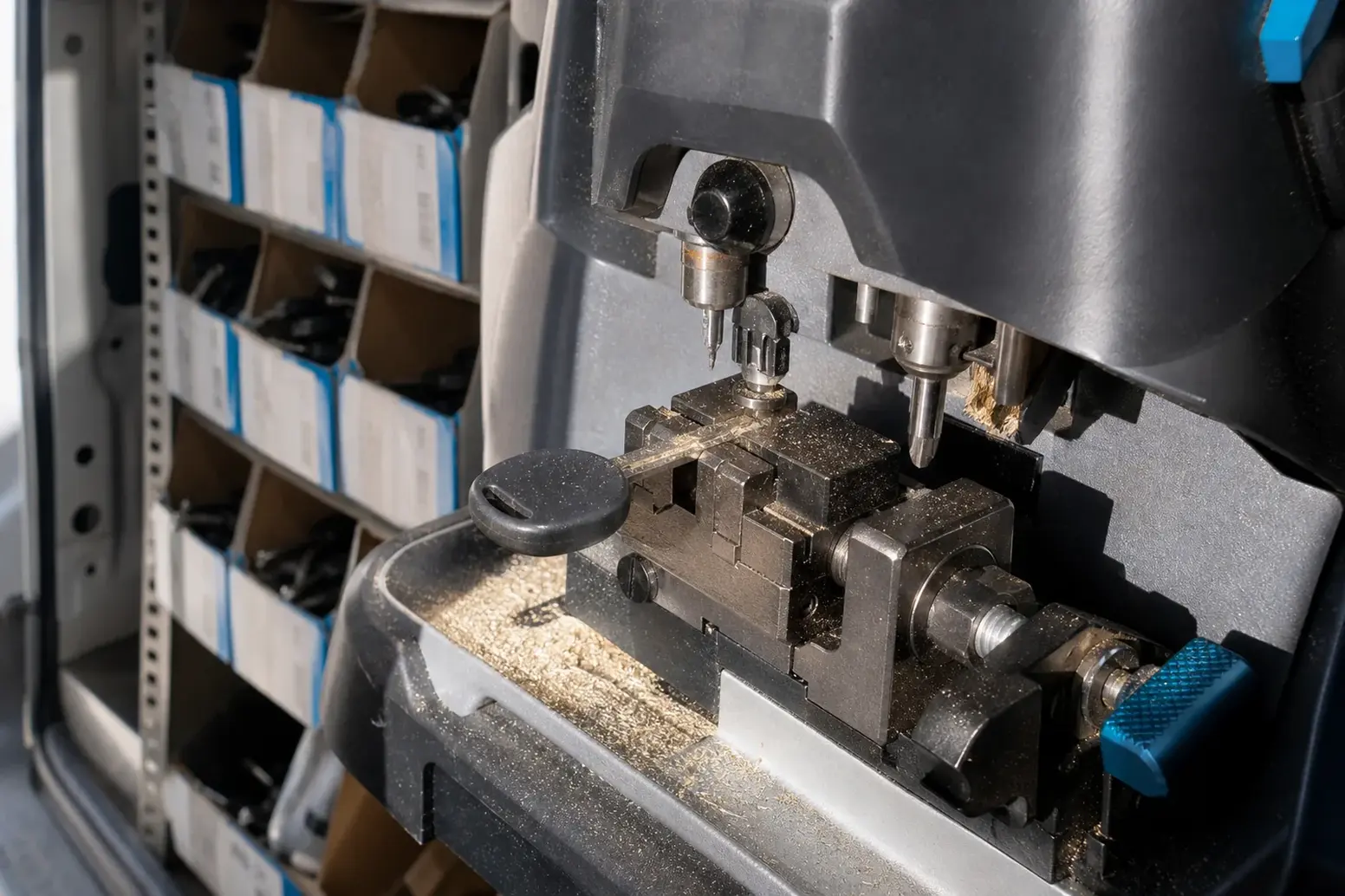
There's no trip across the bridge to a store and no waiting at a counter. The cutting machine travels with the technician, so keys are cut in your driveway, at the marina office or outside the shop, and tested on the spot.
Bring every key you want copied, including the odd ones: the lanai slider, the side gate, the storage closet off the garage, the pool cage door. If a key is too worn to copy well, you hear that before anything is cut, along with what would work better.
Every copy made from a worn key carries the wear forward. After a few rounds the cuts are rounded off, the key catches on the way in, and someone starts jiggling it to get the door open. That jiggling slowly wears the lock as well.
When the key in your hand is past its best, the technician can cut a fresh key to the lock itself instead of to the tired copy, once the house is shown to be yours. It spares the lock, and every keyholder starts again with a key that slides in cleanly.
A house that sits empty for part of the year usually has a small crowd of keyholders: the house watcher, the pool service, the pest company, a neighbor who checks after a storm, a relative flying in for the holidays. Each of them needs a key that works on the first try, and you need to know who holds one.
Spare keys can be stamped or tagged so they're easy to tell apart, and a short list of who holds which key is simple to keep. When that list grows past what you're comfortable with, a rekey retires every key at once, and copies go only to the people you choose.
Small keys go missing more often than house keys, and they're the ones nobody thinks about until the mail piles up or the storage unit won't open. Mailbox keys, padlock keys, shed and gate keys, and the little keys for cabinets and lockboxes can all be copied on the same visit as the front door.
If the original is gone altogether, the answer depends on the lock. Some can have a new key made for them; others are simpler to swap for a new lock with fresh keys. The technician tells you which before any work starts, and the estimate covers both options.
A rekey usually ends with two or three keys per lock, which is rarely enough for a family plus the people who help run the house. Extra copies can be cut from the new keys on the same visit, while the technician is still at the door and every lock can be tried.
The same goes for a new deadbolt or a keypad lock with a key backup. Cutting the spares during the same visit means nobody is left holding an old key that no longer fits, and nobody has to make a separate trip later for a copy that may or may not turn.
Most visits are a single stop.
House, mailbox, padlock, office or a mix, and how many copies of each.
Worn, bent or cracked keys are flagged before anything is cut.
Each copy is cut in the service vehicle and tried in its own lock.
Tagged if you want them told apart, at the free estimate you agreed to.
Some keys aren't copied on request alone. Keys to a building on a master key plan are copied only with the owner's or the manager's OK, and keys marked do not duplicate are handled the same way, with the authorization of whoever is responsible for them.
Keys to a business, a rental or a condo common area follow the same rule. It's the same care you would want taken with your own keys, and it keeps a master key plan working the way it was set up.
Car keys and fobs are a separate job because most of them need programming as well as cutting, so they have their own page: car keys and fobs. Everything else on the ring is covered here.
Usually. If the cuts are badly worn, a copy would carry the same problem into the new key, so the technician may suggest cutting a fresh key to the lock instead, once the house is shown to be yours. You hear which way makes sense before anything is cut.
Yes. Mailbox keys can be copied on the same visit as the house keys. If the only key is lost, a new lock with fresh keys is often the simpler answer, and you hear both options first.
Each copy is tried in the lock it belongs to before it's handed over. A copy that sticks is recut while the technician is still there.
With the authorization of the owner or the manager responsible for it. Without that, the key isn't copied.
Often, yes, by rekeying the locks so they share a single key. That's a rekey rather than a copy, and the rekey page explains how it's done.
Yes. Copies can be stamped or tagged, so you know at a glance which key belongs to which person.
Yes, on the car keys page. Most car keys and fobs need programming as well as cutting, so they're handled as their own job.
Yes. You hear what the keys need and get a free estimate before anything is cut.
Tell us your street and we send a tech.