A smart lock is still a deadbolt. The bolt goes into the frame the same way, and the door is exactly as strong as the frame, the strike and the screws holding them. What changes is how people get in: a code on a keypad, a tap in an app, or the old key, which stays as a backup on nearly every model worth installing.
For a household, that means nobody hides a key under the planter anymore. For an owner who spends half the year somewhere else, it means the house watcher, the pool service and the cleaner each get their own code, and any one of them can be switched off without touching the others.
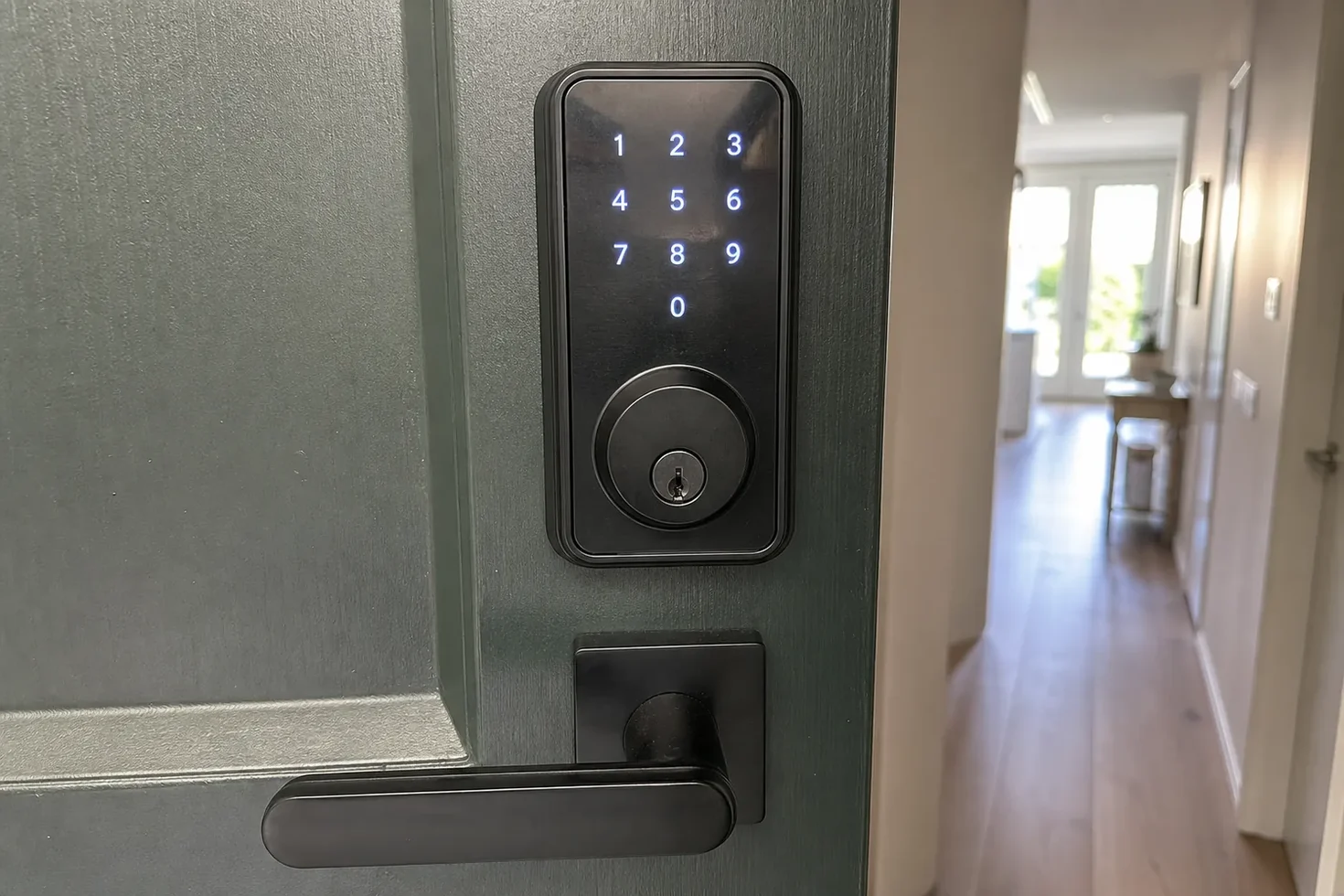
The simplest option is a keypad deadbolt with no connection at all. Codes are added at the lock, it runs for a long time on a set of batteries, and nothing depends on the internet. For a lot of homes that is all that's needed.
The next step up adds Bluetooth or Wi-Fi, so the lock answers to a phone. You can see whether the door is locked, send a code to someone who's on the way, and look back at who came and went. Wi-Fi models work from anywhere, but the radio draws more power, so the batteries get changed more often.
There are also retrofit units that replace only the inside half of an existing deadbolt. The outside cylinder and key stay as they are, which suits doors where the exterior hardware matches the rest of the house and the owner wants to keep it.
Electronics on a door here have a harder life than they do up north. A keypad on a door that faces the afternoon sun bakes for hours, and salt air works on finishes and on the screws behind them. Before anything is recommended, the technician looks at which way the door faces, how much cover it has and how close it sits to the water.
Lanai and pool cage doors deserve their own look. Many of them were never built for a deadbolt, and a smart lock on a thin aluminum door frame gives a false sense of security. Sometimes the better answer is a sturdier keyed lock out there and the smart lock on the main entry, where it does real work.
Sliding glass doors are a separate story again. Most smart locks are made for swinging doors, so sliders usually get a secondary lock instead, and the estimate says so plainly.
A seasonal home collects people with access: the house watcher who checks after storms, the pool service, the cleaner, a contractor finishing a repair, maybe a neighbor who waters the plants. With keys, every one of them is a copy you can't take back. With codes, each person has one, and deleting it takes a moment from wherever you are.
The activity log matters as much as the codes. When the house watcher's code shows up on the right day, you know the visit happened. When a code you deleted months ago never appears again, you know the list is clean. For owners who head north for the summer, that record replaces a lot of phone calls.
If you rent the house out, ask the rental manager how they want guest codes handled before the install. Some prefer to issue codes themselves through the app; others want a fixed code per stay. Either way works, and the setup follows their routine instead of fighting it.
Most smart lock trouble starts with the door, not the lock. A deadbolt that has to be pushed or pulled before it will throw is a deadbolt that will drain batteries and jam its motor. Humidity makes doors swell, settling shifts frames, and a strike plate that lined up perfectly ten summers ago may now catch the bolt halfway.
So the door gets checked before the new lock goes on: the bolt has to slide all the way into the frame without help, the strike is moved or reset if it doesn't, and the door's thickness and existing holes are measured against the lock you choose. Most exterior doors take a smart deadbolt in the holes they already have. A door that never had a deadbolt needs a new bore, and you'll hear that before the work starts.
The strike side gets longer screws into the framing where the old ones only bite the trim. That part has nothing to do with the electronics, and everything to do with whether the door holds when someone leans on it.
One visit for most doors, with the lock working in your hand before the technician leaves.
Bolt travel, strike alignment, frame and the holes already in the door.
Keypad only, app-connected or a retrofit, with the free estimate before anything is ordered or opened.
The lock goes on, the strike is set so the bolt throws freely, and the outside key backup is checked.
Your master code, one code per person, auto-lock if you want it, and the app paired to your phone.
A keypad that goes dark, a lock that beeps but won't turn, an app that suddenly says the door is offline: these are the calls that come in once a house has smart locks. Dead batteries cause a share of them, a door that has drifted out of line causes more, and a new router or a power outage explains most of the app problems.
If you're locked out because the lock lost power, call. Getting you in comes first, then the cause. When a lock is near the end of its life, you'll get the honest choice between fixing what's there and putting in something better suited to the door.
Usually, yes. Most exterior doors already have the standard holes a smart deadbolt uses. The technician measures the door's thickness and the existing bore before you choose, and a door without a deadbolt can be bored for one.
Most smart locks warn well ahead with a low-battery signal on the keypad or in the app, and nearly all keep a key cylinder as a backup. If one goes dark with you outside and no key, call and we'll get you in.
Yes. Each person can have a separate code, and some locks let a code work only on certain days or hours. Deleting one code doesn't affect any of the others.
No. A keypad deadbolt works with no connection at all. Wi-Fi or a small bridge near the door is only needed if you want to see and change the lock from away from home.
Often not. Many pool cage and screen doors are too light for a deadbolt to add much. A sturdy keyed lock there and the smart lock on the main entry is usually the better plan.
Yes. The codes, the app and the auto-lock are set up with you, so you leave knowing how to add or delete a code from wherever you spend the summer.
Yes. A retrofit unit replaces only the inside of the deadbolt, so the outside cylinder and the keys you already have keep working.
Yes. The door is checked, the options are explained, and you get a free estimate before anything is installed.
Tell us your street and we send a tech.