A lockout at home usually happens at the worst moment: groceries melting in the car, a child inside, a door that swung shut behind you on the lanai. Getting you back in comes first. Before any door is opened, the technician confirms the house is yours or that you live there, with an ID showing the address, a lease, or a closing statement on your phone.
That check protects you as much as anyone. A locksmith who opens a house for whoever asks is a locksmith who would open yours. Once you're inside, the technician looks at why it happened: a lock that latches on its own, a key that has started to bend, a spare that was never made.
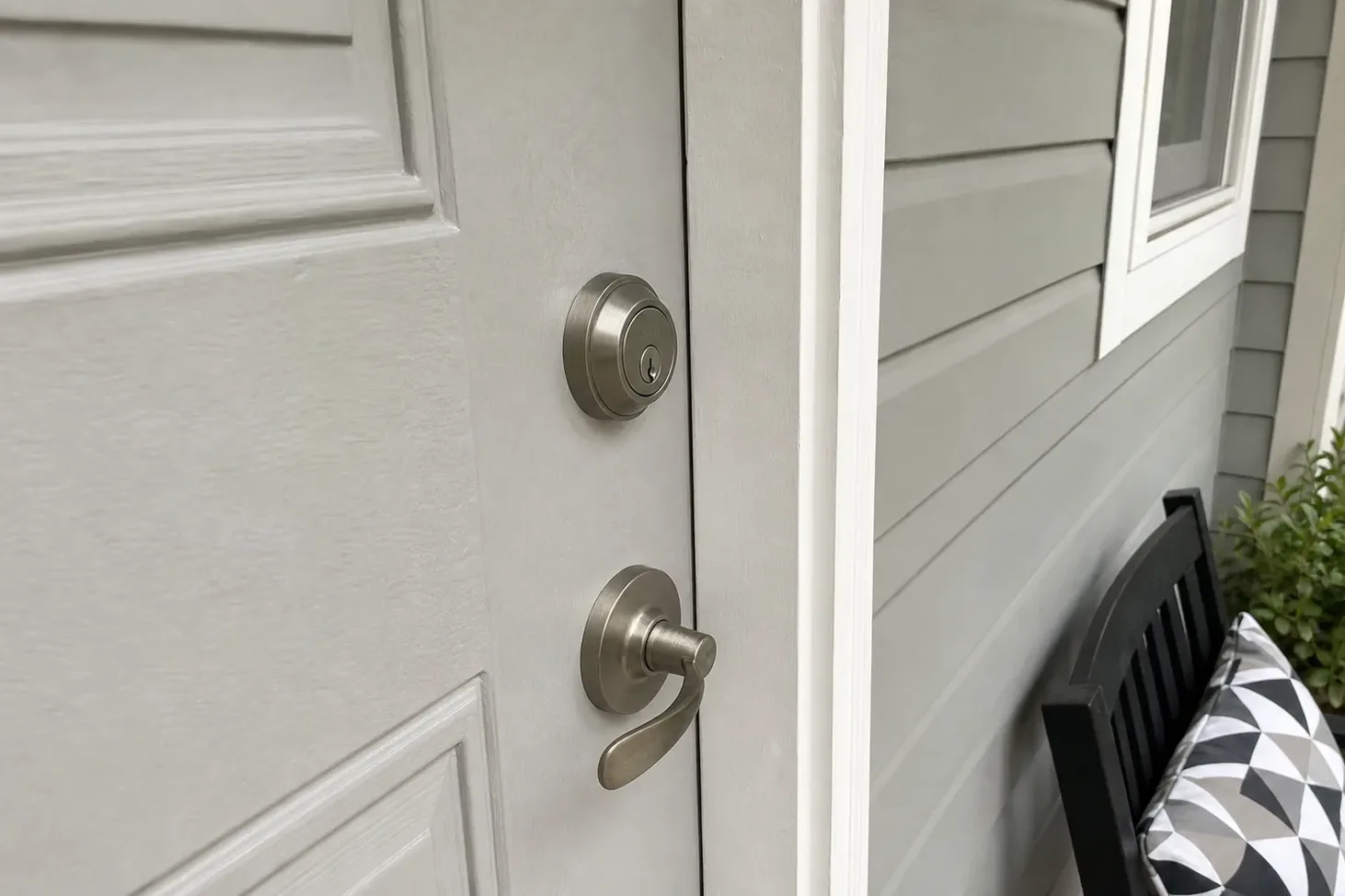
Plenty of houses still have the light deadbolts they were built with, and a few doors have none at all. A deadbolt only works if the bolt goes fully into the frame and the strike plate is anchored in wood behind the trim. On many doors the strike is held by short screws that grip nothing but the jamb.
When a deadbolt is installed or upgraded, the strike side gets longer screws that reach the framing, the bolt is set to throw its full length, and the door is closed and locked a few times to be sure it doesn't bind. A door that never had a deadbolt is bored for one, and you hear what that involves first.
Doors exposed to the weather get hardware with a finish that stands up to salt air, which is the difference between a lock that turns smoothly for years and one that gets stiffer every season.
The door from the garage into the house is the one families use most, and it's often the weakest. Builders commonly put a knob lock there and nothing else, on the assumption that the garage door does the securing. Once the garage door is left up, or a remote goes missing, that knob is all that stands between the street and the kitchen.
A deadbolt on the garage entry, keyed to match the front door, closes that gap. Side doors and the door from a pool bath straight outside get the same look, since they're the ones people forget to lock at night.
Humid, salty air is hard on a lock. Pins corrode, springs weaken, and the key that used to slide in now has to be wiggled. Sometimes the cylinder is the problem; sometimes the door has swollen or dropped, and the bolt rubs the strike on its way in.
The technician works out which it is before suggesting anything. A corroded cylinder is swapped for one that suits the coast, a lock that's simply worn is replaced, and a door that has moved gets its strike reset so the lock stops fighting it. No part is changed just because it's easy to sell.
The latch on most sliding glass doors was designed to keep the door shut, not to keep anyone out. A slider can often be lifted on its track or pried at the latch with less effort than a front door takes, and on a house with a lanai and a pool cage it's the door that faces the water and the yard nobody watches.
Secondary locks fix that without changing how the door works day to day: a foot lock at the bottom of the frame, a bar in the track, or a keyed lock where you want to lock the slider from outside. The technician also looks at whether the door can be lifted off its rollers when closed, because a slider that lifts out makes every lock on it pointless.
Small locks go missing from memory until the day the key does. Mailbox locks on boxes you own can be changed when keys disappear with a previous owner. Side gates, shed doors and the latch on a pool gate that no longer catches all get looked at on the same visit if you ask.
These are quick jobs on their own, and they make the most sense alongside a rekey or a deadbolt install, when the technician is already at the house with the parts on board.
Most home jobs are done in one visit.
Which door, what the lock does, and whether you're locked out right now.
ID with the address, a lease or a closing statement before any lock is opened or changed.
What each lock needs and why, before any part goes in.
Every lock that was touched is locked and unlocked with the new keys while you watch.
Some houses here have a guest suite or a small rental unit with its own door. A simple master key setup lets the owner's key open everything while the tenant's key opens only their entrance, so nobody has to carry a ring of keys or hand out access to the whole house.
Keypads solve the same problem another way, with a code per person that can be deleted at any time. If that sounds like a better fit, our page on smart lock installation covers how they're set up and what they need from the door.
The technician asks for an ID with the address, a lease, or closing papers. If those are inside, we work out another way to confirm it with you before the door is opened.
If the locks are in good shape, rekeying is enough: the old keys stop working and you get new ones. Locks that are worn, corroded or too light are replaced, and you hear which is which first.
Maybe, or the door may have moved. Humid, salty air wears cylinders, but a door that has swollen or dropped makes the bolt rub too. The technician checks both before suggesting a fix.
Usually, yes. If the two locks take the same kind of key, the garage entry can be keyed to match, often while a deadbolt is added there.
On mailboxes you own, yes. If the box belongs to a community cluster, the owner of that box decides who changes it.
A secondary lock at the bottom of the frame or in the track makes a big difference, and a door that can be lifted off its rollers gets that fixed too. Neither changes how you open the door every day.
Yes. The suite's door can be keyed differently from the main house, with an owner's key that still opens everything.
Yes. You get a free estimate at the door before any lock is opened, changed or installed.
Tell us your street and we send a tech.